
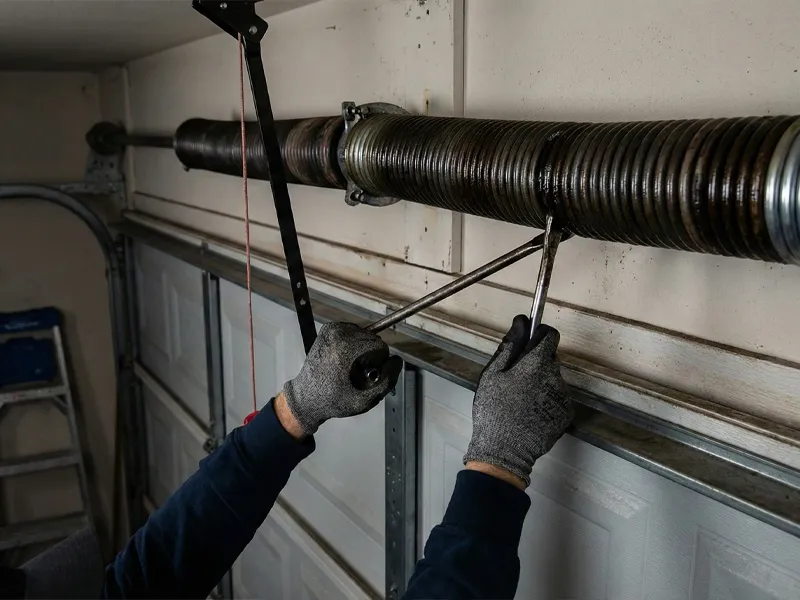
Garage door spring replacement becomes necessary when the springs that lift and lower your door reach the end of their service life. Unlike many garage door components, springs are not designed to be repaired once they wear out or break. They must be replaced to restore safe, balanced operation. Knowing when replacement is the right call helps you avoid unnecessary damage to the rest of the system, keeps your home secure, and prevents the dangerous situation of a heavy door operating with weakened tension.
Recognizing the early warning signs also gives you the chance to schedule service on your own timeline rather than waiting for a complete failure that leaves your door stuck open or closed. A well-planned replacement protects your daily routine, supports long-term system performance, and gives you peace of mind every time the door opens.
What Garage Door Spring Replacement Actually Means
Garage door spring replacement is exactly what it sounds like, removing the old, worn, or broken spring and installing a new one in its place. Many homeowners assume springs can be patched, welded, or adjusted back into working condition, but that is not how these components are built. Once the metal weakens from repeated tension cycles, the spring loses its ability to store and release energy reliably.
Replacement is the only safe and lasting solution. A professional technician selects a new spring that matches the door’s weight, size, and usage demands, then installs it with the correct tension to restore proper balance. The goal is not just to swap out a single part, but to bring the entire system back into smooth, dependable operation.
How to Tell When It Is Time to Replace Your Garage Door Spring
The clearest sign that your garage door spring needs replacement is a complete break, often accompanied by a loud snapping sound from the garage. You may also notice a visible gap in the spring coil where the metal has separated. When this happens, the door will likely refuse to open or will feel extremely heavy when lifted manually.
Other warning signs are more gradual. A door that opens slower than usual, hesitates partway through its travel, or slams down faster than it should often points to weakening spring tension. The opener may also start to strain, hum loudly, or fail to complete a full lift cycle. If you notice any of these behaviors, the springs are usually the source of the issue. Catching these signs early gives you the chance to plan replacement before a complete failure leaves your door stuck.
Why Springs Wear Out Over Time
Garage door springs are built to handle a specific number of operating cycles, with one cycle counting as one full opening and closing of the door. Standard springs are typically rated for around 10,000 cycles, while higher-grade options can last significantly longer. For an average household that opens the garage door three to five times a day, that translates to roughly seven to nine years of service before replacement becomes necessary.
Environmental conditions also play a role. Extreme temperatures, high humidity, and exposure to moisture can accelerate wear and lead to rust or corrosion. Heavier doors and homes with frequent garage use will reach the end of the spring’s service life faster than average. Understanding these factors helps homeowners plan for replacement before unexpected failure disrupts daily routines.
Single Spring vs Dual Spring Replacement
Many residential garage doors use a dual-spring system, meaning two torsion springs work together to lift the door. When one spring fails in a dual-spring setup, the second spring is almost always close to failing as well. Both springs have been under the same load and have completed the same number of cycles, so replacing only the broken one is usually a short-term fix that leads to another service call within a few months.
For this reason, professional technicians often recommend replacing both springs together. This approach keeps the lifting force balanced, reduces strain on the opener, and provides a more reliable long-term result. Single-spring systems, on the other hand, only require one spring to be replaced when the time comes, since there is no matching component to consider.
What Happens If Spring Replacement Is Delayed
Putting off spring replacement is one of the most common ways homeowners end up with bigger garage door problems than they started with. A worn or broken spring forces the opener to do work it was never designed to handle. Over time, this extra strain damages the motor, gears, and internal drive components, often leading to premature opener failure.
The cables, rollers, and tracks also take on additional stress when the springs are not pulling their weight. Cables can fray or snap, rollers can wear unevenly, and tracks can shift out of alignment. What begins as a single spring issue can quickly turn into a multi-component repair.
There is also a serious safety concern. A door operating with a compromised spring can fall suddenly and without warning. Anyone or anything underneath the door at that moment is at risk of injury or damage. Replacing the spring promptly protects your home, your vehicles, and the people who use the garage every day.
Choosing the Right Replacement Spring for Your Door
Not all garage door springs are the same, and selecting the correct replacement makes a major difference in how long the new spring lasts. Spring selection is based on several factors, including door weight, height, cycle requirements, and how often the garage door is used each day. Choosing the wrong spring can lead to poor lifting performance, premature wear, and unbalanced operation.
Standard springs from general retail stores tend to be low-cycle and made for basic, short-term use. Professional service often uses higher-cycle, powder-coated springs that are designed for extended durability and consistent performance. The powder coating helps reduce moisture damage and extends the lifespan of the spring, making it a stronger long-term investment for homeowners who want fewer service calls down the road.
Why Professional Replacement Matters
Garage door spring replacement is not a DIY-friendly project. The amount of stored energy in a wound torsion spring is significant, and a sudden release of that tension can cause serious injury. Specialized winding bars, proper safety equipment, and trained technique are required to handle the process correctly.
Professional replacement also includes the technical steps that DIY attempts often skip. Balance testing, opener calibration, and inspection of surrounding components are all part of a complete service visit. Skipping these steps can leave the door operating unevenly even with a new spring installed.
Reveille Garage Door Service approaches every replacement with this level of attention. As a licensed garage door company, the team focuses on accurate diagnostics, professional installation methods, and upgraded components that support long-term reliability.
What to Expect During the Replacement Process
A standard garage door spring replacement begins with a full system inspection. The technician identifies the failed spring, checks the condition of related components, and confirms whether one or both springs need to be replaced. Any remaining tension in the damaged spring is then carefully released using the proper tools.
Next, the old spring is removed and the new spring is installed and wound to the correct tension based on the door’s weight and size. After installation, the technician performs balance testing to confirm the door lifts smoothly and stays in place when raised halfway. Final calibration may include adjusting opener force settings, lubricating moving parts, and verifying that cables and rollers are functioning correctly. Most residential replacements are completed within one to two hours.
How to Extend the Life of Your New Garage Door Springs
Once your new springs are installed, a few simple habits can help extend their lifespan and protect your investment. Lubricating the springs and other moving parts every few months reduces friction and slows down wear. Using a quality garage door lubricant is a small task that makes a noticeable difference over time.
Scheduling periodic professional tune-ups is another smart move. A trained technician can spot early signs of wear, check spring balance, and make small adjustments that prevent larger problems later. Avoiding heavy or rapid use of the door during extreme weather conditions also helps, since temperature swings place extra stress on spring tension. With consistent care, a quality spring can deliver many years of reliable performance.
Schedule Garage Door Spring Replacement With Reveille Garage Door Service
When your garage door springs reach the end of their service life, professional replacement protects your home and the rest of your garage door system. Reveille Garage Door Service is a licensed garage door company serving homeowners across Southern California, Texas, and nearby areas. The team brings more than ten years of hands-on industry experience, installs higher-cycle powder-coated springs built for long-term durability, and stands behind every replacement with extended warranty protection. Reach out to Reveille Garage Door Service today and have your garage door evaluated by professionals committed to doing the job right the first time.