
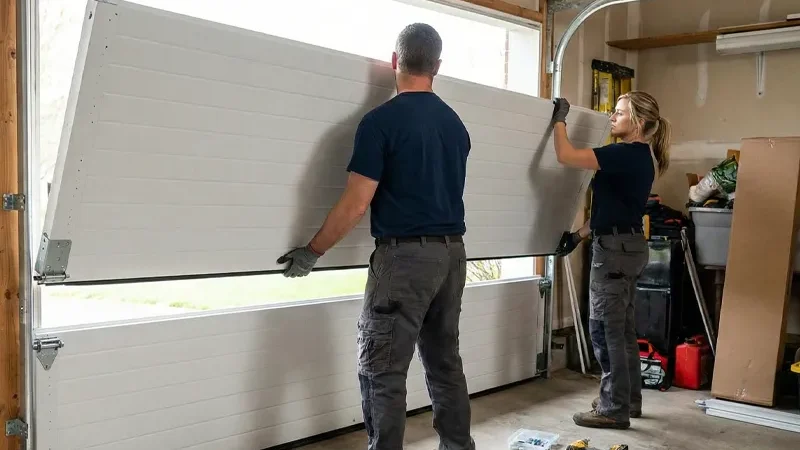
The cost of a new garage door installation is not determined by a single number or a single factor. It is shaped by a combination of door size, material choice, insulation level, existing site conditions, hardware specifications, and the scope of work required to complete the installation correctly. Homeowners who understand what actually drives the cost are better equipped to evaluate quotes accurately, ask the right questions before committing, and avoid the surprise charges that come from a phone estimate that did not account for what the job actually involves. A new garage door installation is one of the more significant home improvement investments a homeowner makes, and approaching it with the right information leads to better outcomes.
The Size of the Door Is the Starting Point
Door size is the foundation of every cost calculation in a new garage door installation. Width and height determine the track length, spring sizing, cable drum configuration, and the amount of material required for the door panels. Standard sizing for a single-car garage door typically runs eight or nine feet wide by seven feet tall. A standard two-car door runs sixteen feet wide by seven feet tall. Everything within those dimensions is a stock configuration, which keeps hardware costs predictable.
Where costs begin to climb is when the opening falls outside those standard dimensions. Older homes in the San Bernardino area were frequently built with non-standard rough openings, and once the old door comes off the actual dimensions often do not match what a phone quote assumed. Custom track lengths, non-standard spring configurations, and specialty cable drum setups are all required to fit a door correctly in an oversized or undersized opening. An in-person measurement before the quote is the only reliable way to account for this. Skipping that step is where most phone quotes fall apart on installation day.
Door Material Drives Both Price and Long-Term Performance
The material selected for a new garage door affects not just the upfront panel cost but the hardware required to support it, the spring sizing needed, and the long-term maintenance commitment. Steel is the most common residential choice in the Inland Empire because it handles the region’s heat cycling better than aluminum and requires significantly less upkeep than wood. Aluminum is lighter and works well for contemporary designs but dents more easily and offers less insulation performance in high-heat climates. Wood delivers a premium custom look but requires periodic refinishing to prevent moisture damage, especially in areas with temperature swings.
Each material carries a different panel cost, and each one affects the downstream hardware decisions in ways that are not always visible in a line-item quote. A steel door with a full polyurethane insulation fill is heavier than an uninsulated steel door of the same size, and that weight difference directly changes the spring and opener specifications required for a correct installation.
Insulation Level Affects More Than Just the Door Price
Insulation is one of the most consistently underestimated cost factors in a new garage door installation. Homeowners often select a door style based on appearance and add insulation as a secondary consideration, without realizing that insulation adds meaningful weight to the door and that weight changes the hardware specification for the entire system.
A standard non-insulated steel door panel runs approximately 18 to 20 pounds per section. A fully insulated two-car door with a polyurethane foam fill can reach 200 to 250 pounds total. That weight difference requires higher-cycle torsion springs, a heavier cable rating, and a higher-horsepower opener to operate safely over time. We have completed installation visits where the homeowner had already purchased a new insulated door expecting to reuse their existing opener, only to discover on arrival that the opener was a half-horsepower unit being asked to run a door that required at least three-quarter horsepower for reliable daily operation.
The Condition of the Existing Frame and Opening
One of the most common sources of unexpected cost in a new garage door installation is what the inspection reveals about the existing frame once the old door comes off. Older homes in the San Bernardino area frequently have wood framing behind the garage door that has experienced moisture exposure or structural settling. When the old door is removed and the frame is exposed, deteriorated wood, an out-of-square opening, or a header that cannot safely carry the new door’s weight all require repair before the installation can proceed correctly.
We have pulled up to jobs where a previous installer had hung a new door on a compromised frame because addressing it was not in the original scope. The frame looked acceptable from the outside and the quote never included an inspection. The result was a door that looked fine initially but began showing tracking problems and hardware wear within the first year. Doing the job correctly from the start costs more upfront and far less over time.
Spring and Hardware Specifications Add to the Total
Every component in a garage door system is sized to the door it supports. Springs, cables, drums, rollers, and tracks are all specified based on door weight and width. When those specifications are matched correctly the system operates smoothly and the components last as long as they are designed to. When they are not matched correctly, the weakest link fails first and the repair cycle begins earlier than it should.
A fully insulated two-car door in the 200 to 250-pound range requires torsion springs rated for the appropriate cycle count and torque output. Standard-grade springs installed on a heavier door reach their cycle limit significantly faster than rated, leading to premature failure and a repair call that the right spring selection would have prevented. This is why we use higher-cycle powder-coated torsion springs and high-capacity bearing rollers as our standard installation components. The International Door Association recognizes higher-cycle spring ratings as a meaningful performance standard, and it is the standard we apply to every installation.
Opener Compatibility With the New Door
A new garage door installation frequently surfaces questions about the existing opener. An opener that worked well with the old door may not be the right fit for the new one, particularly when the new door is heavier. Opener horsepower ratings are matched to door weight, and an undersized opener running a heavier door shortens its own service life by operating outside its rated duty cycle on every run.
Running an undersized opener until it fails costs more overall than upgrading it during the same visit when labor is already on site. It is one of the variables worth discussing before installation day rather than discovering it after the new door is already hanging. A quick compatibility check during the initial assessment prevents the conversation from happening at the worst possible time.
Why Licensed Professional Installation Protects Your Investment
A licensed garage door installation covers far more than hanging the door panels. It includes spring sizing calculations based on actual door weight, opener calibration matched to the new door’s load, safety sensor alignment, balance verification, and a final inspection of all hardware under operating conditions. California state contractor licensing requirements for garage door installation exist because spring sizing errors and header load miscalculations can result in structural damage or injury.
At Reveille Garage Door Service, every installation is completed by our own licensed team, not subcontractors. We use higher-cycle powder-coated torsion springs and high-capacity bearing rollers as our standard components, and every job is backed by extended warranty protection covering both parts and labor.
How to Plan for the Real Cost of a New Garage Door Installation
The most reliable way to plan for installation cost is to schedule an in-person assessment rather than rely on a phone quote. Site conditions, frame condition, existing hardware compatibility, and opening dimensions all affect the final number in ways that cannot be evaluated without seeing the job in person. The lowest quote is not always the most accurate one, and it is rarely the most complete. A quote that does not account for frame condition, hardware specifications, or opener compatibility will be revised on installation day. Going in with the right questions, what hardware is included, what happens if the frame needs repair, and whether the existing opener is compatible, puts you in a much stronger position before any work begins.
Schedule Your New Garage Door Installation With Reveille Garage Door Service
When you are ready to move forward with a new garage door installation, working with a licensed professional from the start protects both your investment and your home. Reveille Garage Door Service serves homeowners across Southern California, Texas, and nearby areas with more than ten years of hands-on industry experience, higher-grade components built for long-term performance, and a licensed team that handles every job without outside subcontractors. Reach out to Reveille Garage Door Service today and get an in-person assessment from professionals who will give you an accurate picture of what your installation actually involves before any work begins.